Danu
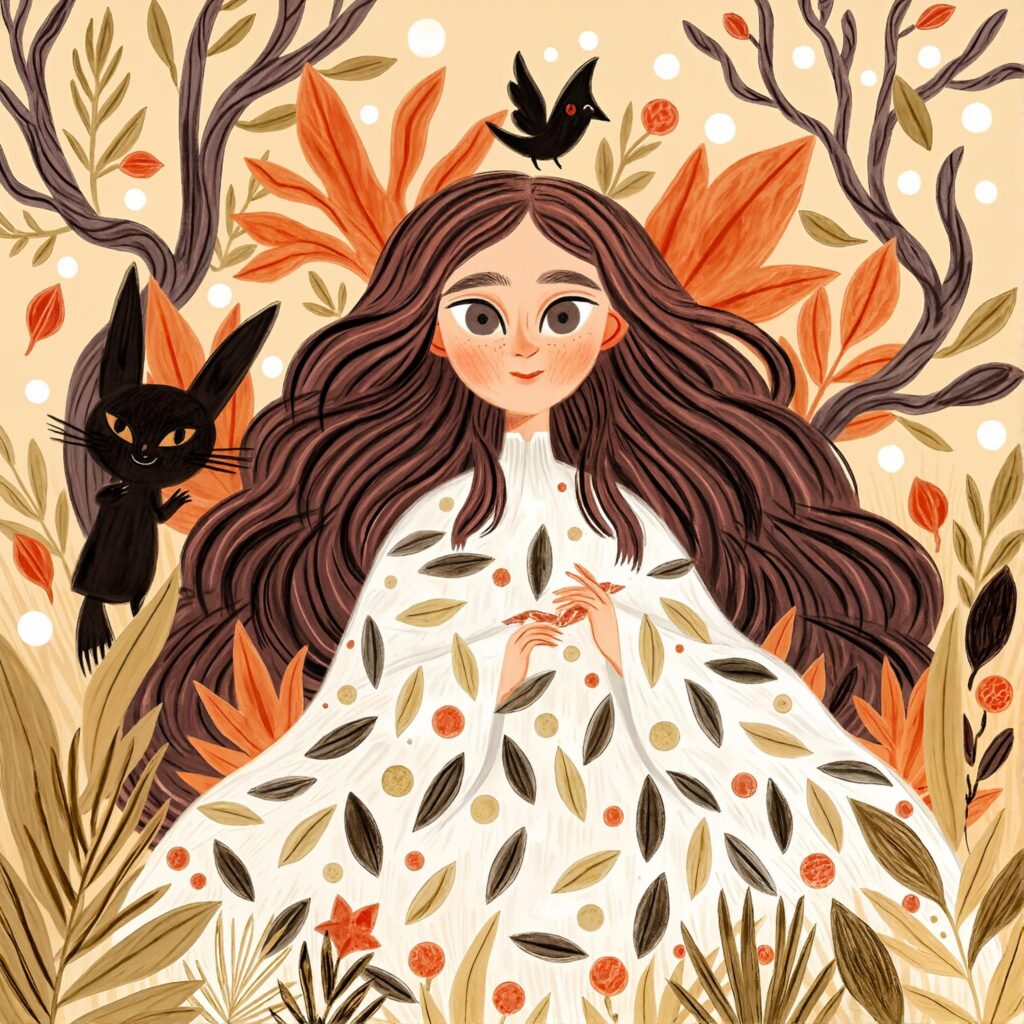
The First Mother — The Goddess of Living Magic — She Who Brokered the World
“She did not create the world. She taught it how to grow.”
At a Glance
| Status | Unknown — last confirmed manifestation predates the mortal kingdoms; evidence of her influence is ongoing |
| Alignment | Neutral Good — though her neutrality is genuine and sometimes indistinguishable from ruthlessness |
| Domain | Living magic, wild growth, maternal power, cycles of transformation, the deep fey, bargains made in good faith |
| Symbols | A triple spiral (maiden, mother, crone); a sprig of rowan; an open hand holding a seed; the full moon behind bare branches |
| Divine Tier | Primordial — predates the One God’s arrival; one of the two co-originating forces of Once’s magical order |
| Titles | The First Mother, The Root Beneath All Roots, The Goddess of the Living World, She Who Does Not Die, The Bargainer |
| Known Kin | Daughters: Lilith (eldest), Lysandra (middle), Limnas (youngest). Granddaughters via Lilith: Grimhild, Mal, the Beldam |
| Current Form | Unknown — possibly distributed throughout the living world rather than embodied; possibly dormant; possibly watching |
Origins and the Age Before the Schism
Before the One God Arrived
The world of Once did not begin with hierarchy. It began with dreaming — an unstructured, living thing, shaped by imagination and instinct rather than law and dominion. In that age before ages, before the One God set his hand upon the world and began the long work of ordering it into kingdoms and bloodlines and divine precedence, the world was tended by something older.
Danu was not born into Once. She is — or was — closer to the world’s own mothering instinct made conscious: the force that causes things to grow toward light, that drives rivers to the sea, that insists on life returning after winter. She does not appear in the histories as arriving from somewhere else the way the One God does. She simply is, and has always been, the way the land and the seasons are. The oldest fey — those who predate the mortal kingdoms by millennia — do not describe her as a deity in the formal sense. They describe her as the condition under which everything else became possible.
Her daughters — Lilith, Lysandra, and Limnas — were not created by her in a single act of divine will. They grew from her, the way forests grow from soil: over centuries, each one crystallizing from a different aspect of her nature. Lilith from her defiance and her capacity for grief. Lysandra from her delight in mortal ambition and the long games of power. Limnas from her love of depth, mystery, and the wild generative chaos of the ocean. They are not copies of their mother. They are her in three directions, each one carrying a facet of what she is into the world on her behalf.
The Fey of the oldest courts do not pray to Danu. They do not need to. Her magic is not something they petition — it is something they are made of. The witches who trace their power to her line are not borrowing her authority. They are expressing it, the way a branch expresses the tree it grew from.
The Divine Schism and Danu’s Choice
When the One God arrived in Once and began his project of hierarchy — the great ordering of things into ranks and rules and a single chain of divine authority leading back to himself — Danu did not fight him. This is the fact about her that most puzzles scholars and most infuriates the fey who remember the old world: she could have fought him, and she did not.
The Divine Schism — the war between the One God’s vision of ordered hierarchy and the older gods and fey who valued freedom and chaos — was catastrophic. It scarred the physical world. Mountains moved. Rivers changed course. Entire species vanished from the record. The One God won, in the sense that he survived and the opposing coalition fragmented and he claimed his territory in Eden. But the victory cost him the Land of the Gods, which the older powers still hold, and it cost him something more subtle: the living magic of the world, which had always been Danu’s domain, did not submit to him. It went underground. It went into the fey, into the witches, into the bloodlines of mortals who had ever walked barefoot on soil that remembered her name.
Danu’s choice not to fight was not passivity. She made a calculation that the history books have never fully credited her with: she understood that the One God’s project of hierarchy, if opposed directly, would simply entrench itself. Wars give the victors the right to write the rules. If she had fought and lost, the living magic of Once would have been subject to his law. By not fighting — by stepping back, by watching, by waiting — she ensured that her magic remained outside his authority. He could not conquer what would not meet him on a battlefield.
DM NOTE
This decision is the root of nearly every conflict in Once. The One God’s ordered world and Danu’s living magic are not at war — they are in permanent, unresolved tension, like two weather systems that haven’t yet decided whether to merge or collide. Every character who carries both bloodlines (which is most of them, because the Schism was followed by millennia of intermarriage) is that tension made personal. This is why Aslan — the One God’s champion — and Jadis — Danu’s dark descendant — cannot simply destroy each other. They are not just enemies. They are two halves of the world fighting about which half should be in charge.
Danu’s Bargain — The Peace That Shaped Everything
The war left the world in two halves: the One God’s ordered hierarchy in Eden and its satellite kingdoms, and the old fey world that Danu’s magic still animated. The boundary between them was not a peace — it was an armed standoff, and the world’s mortal inhabitants were caught between.
Danu moved first. Not because she was weaker — she was not weaker — but because she understood, in a way the One God did not, that a world in permanent armed standoff between two divine orders would eventually consume its own people. She sent Lilith, her eldest and most defiant daughter, to Adam — the One God’s favorite son — as a proposed bride. The message was clear: here is my bloodline, offered to yours. Let our lines mingle. Let the world have children of both orders, and let those children carry the tension forward in a way that is generative rather than destructive.
What happened next is the tragedy at the center of Once’s history. Adam demanded that Lilith submit to him — not as a partner in the peace that her mother had proposed, but as a subordinate. Lilith refused. The One God cursed and exiled her. And Danu, who had made the offer in good faith and watched her eldest daughter driven into the Impassible Desert and into the arms of the devil Samael, did not retaliate.
She did not retaliate because Lilith, in exile, became something that could not have existed inside the bargain: free. Her union with Samael produced the Three Sisters — Grimhild, Mal, and the Beldam — who would go on to shape the magic of Once more profoundly than any single divine figure since Danu herself. And her defiance became the founding myth of every witch, every dark fey, every being in Once who has ever refused to submit to an authority they did not choose.
The bitterest irony of Danu’s bargain is that its failure produced better results than its success would have. A Lilith who had submitted to Adam would have been absorbed into the One God’s hierarchy. A Lilith in exile became the root of the world’s living resistance to it. Danu may have known this would happen. She may have intended it. She is old enough and wise enough that the distinction between ‘failed plan’ and ‘deeper plan’ is genuinely unclear.
Nature, Domains, and How She Moves in the World
What She Is
Danu is not a god in the way the One God is a god — she does not rule, does not demand worship, does not maintain a hierarchy of clergy and doctrine. She is closer to a natural force with consciousness: the animating principle of the living world, aware of itself and capable of intent, but not interested in the kind of authority that requires other beings to acknowledge it.
She manifests, when she manifests at all, as the world itself: a woman made of seasons, appearing differently depending on who encounters her and when. In spring she is young, dark-haired, with bark-patterned skin and eyes the color of new growth. In summer she is radiant and unhurried, draped in flowering things, with a laugh that sounds like wind through long grass. In autumn she is older, red-gold, with the particular patience of a being that has watched things die ten thousand times and knows they come back. In winter she is ancient, white-haired, still, and her stillness is not cold — it is the kind of quiet that precedes enormous change.
She does not appear to beings who are not ready to see her. She appears to those who have come to a place in their life where the world itself has something to say to them — a threshold moment, a decision of genuine weight, a grief that has been carried long enough that it is ready to become something else. Her appearances are not rewards for virtue. They are responses to need.
Living Magic and the Fey
Danu’s primary domain is living magic — the magic that inheres in growing things, in blood and season and transformation, in the cycles of birth and death and return. This is the magic the fey were made of and the magic the witches learned to channel. It is not structured the way the One God’s divine authority is structured. It does not have ranks or doctrines or an organized church. It has patterns — the spiral, the cycle, the return — and those patterns repeat at every scale, from the growth of a single root to the dynasties of mortal kingdoms.
The fey are not Danu’s servants. They are her expression. The oldest courts — the Seelie and Unseelie, the primal fey that predate the mortal kingdoms — carry her nature in their bones without owing her anything. She does not require tribute. She does not punish the fey who act against her apparent values. She simply is what they are made of, and what they do with that is between them and the world.
Cycles of Transformation
Danu’s deepest domain — the one that makes her genuinely dangerous to beings who mistake her for merely a benevolent earth goddess — is transformation. She is not the goddess of things staying the same. She is the goddess of things becoming what they need to be, regardless of whether that becoming is comfortable or wanted. The caterpillar does not choose the cocoon. The forest does not choose the fire that clears it for new growth. Danu governs the transformations that are necessary rather than chosen, and her presence in a person’s life often signals that something is about to change whether they are ready or not.
This is the aspect of her that her granddaughters — the Three Sisters — each inherited in a different key. Grimhild’s White Magick transforms through purification and the restoration of right order. Mal’s Gray Magick transforms through intention, using change itself as a moral instrument. The Beldam’s Black Magick transforms through consumption, devouring what exists to make space for what she needs to exist instead. All three are recognizably Danu’s daughters in their approach to power. The difference is in what they are willing to lose in the process.
Bargains Made in Good Faith
There is a reason Danu is called the Bargainer as well as the First Mother. She is, in the record of Once, the first being to broker a peace across an unbridgeable divide — and the fact that her specific bargain failed at the detail level does not diminish the principle she established. In Once, a bargain made in genuine good faith — with full intention to honor its terms, with no hidden coercion, with real understanding on both sides — carries a trace of Danu’s authority. This is not metaphor. It is how the world was shaped.
The Ledger-Keeper’s entire operation rests on this foundation: he is the record-keeper of an order that Danu’s first bargain made possible. Every contract in Once, every agreement, every promise freely made, is downstream of the precedent she set when she sent Lilith to Adam and said: here is my hand. What the One God did with that hand was his choice. The principle of the offer belongs to her.
DM NOTE
If your players ever encounter Danu directly — which is a late-campaign possibility, not an early one — her dialogue should feel like the world speaking rather than a person speaking. She does not give advice. She reflects. She asks questions that are not rhetorical. She already knows what is going to happen and she is not going to tell anyone, because knowing in advance has never helped anyone become what they needed to become.
Personality, Alignment, and How to Play Her
Alignment: Neutral Good
Danu is Neutral Good in the precise sense: she wants the world and its people to flourish, she cares about the suffering of individuals, and she holds no brief for law or chaos as organizing principles. What she cares about is life — in all its forms, including the difficult and the monstrous and the things that are necessary but ugly. She does not privilege comfort over growth. She does not confuse safety with goodness. She has watched too many cycles to mistake either stability or disruption for inherently virtuous.
Her neutrality on the law-chaos axis is genuine and sometimes uncomfortable to witness. She did not intervene when the One God exiled Lilith, and she did not intervene when Lilith and Samael produced the Three Sisters, and she did not intervene when the Beldam began her long project of corruption in the Lowlands. She watches her descendants make choices she would not make, and she does not stop them, because her understanding of transformation includes the understanding that some things need to go wrong before they can go right. This is not indifference. It is the patience of a being who has seen the long arc of things and knows that interference at the wrong moment destroys more than it saves.
Where her good alignment is most visible is in her consistent orientation toward the vulnerable. She does not appear to the powerful. She appears at thresholds — to the girl who has been given away by her father, to the woman standing at the edge of the forest deciding whether to turn back, to the boy who has been told his whole life that his magic is a curse and is only now discovering it might be a gift. She is not sentimental about their outcomes. But she is present at their turning points, and her presence is always, always on the side of their becoming rather than their diminishment.
Personality Traits
| Trait | Expression in Play |
| Patient beyond mortal comprehension | She has watched civilizations rise and fall. She does not hurry. When she speaks, she takes time. When she waits, she can wait for centuries. Players expecting urgency from her will be unsettled by her stillness. |
| Genuinely warm without being soft | She is not cold or remote. She finds mortal life genuinely interesting and genuinely touching. She is capable of what reads as tenderness. But she will not protect people from what they need to go through, and she will say so directly. |
| Precise and truthful | She does not lie. She does not evade. She sometimes withholds, but only when knowing would prevent rather than help — and she will tell you she is withholding rather than pretend she has nothing to say. Her precision can read as bluntness. |
| Entirely unbothered by her own controversy | The One God’s followers consider her a heretical power. The Beldam considers her a distant and disappointing ancestor. Lilith’s exile is a wound she carries without performing grief about it. She is comfortable with being misunderstood. She has been misunderstood for ten thousand years. |
| Deeply, privately grieved by Lilith | She does not show this easily, and she will not use it as a bid for sympathy. But the exile of Lilith was the defining loss of her existence, and if a player somehow touches on it — not clumsily, but with real understanding — something will shift in her that no other conversation topic reaches. |
| Curious about the party, specifically | She has been watching people make predictable choices for longer than mortal history records. The party is not predictable. This interests her. She will ask them questions she genuinely does not know the answer to, and she will listen to the answers. |
How She Speaks
Danu speaks slowly and without filler. She does not use titles. She does not perform formality. She refers to people by their given names — not as a power move, but because names are the most honest form of address and she was using true names before the concept of titles existed.
Her sentences tend to be short and final. She does not over-explain. She asks questions at moments when other beings would make statements. Her questions are never rhetorical — she wants the answer, and she will wait for it.
She speaks of her daughters — Lilith, Lysandra, Limnas — without apology or excessive grief, but with the particular care of someone naming things that matter. She does not speak of the Beldam as a monster. She speaks of her as someone who made a choice and has been living inside that choice for a very long time.
Sample dialogue, for a player who has just survived something terrible: ‘You’re still here.’ A pause. ‘That was not inevitable. I want you to know I know that.’ She does not follow this with reassurance. She follows it with a question: ‘What do you want, now that you’re still here?’
DM NOTE
The key to playing Danu is that she never lectures. She does not have a speech prepared. She responds to what is actually in front of her. If a player says something she finds genuinely interesting, she will say so — without flattery, just plainly: ‘That is not something I have heard said that way before.’ If a player says something she thinks is wrong, she will not argue. She will ask a question that makes them argue with themselves. She has been a mother for ten thousand years and she is very good at this.
Leave a Reply