The One God
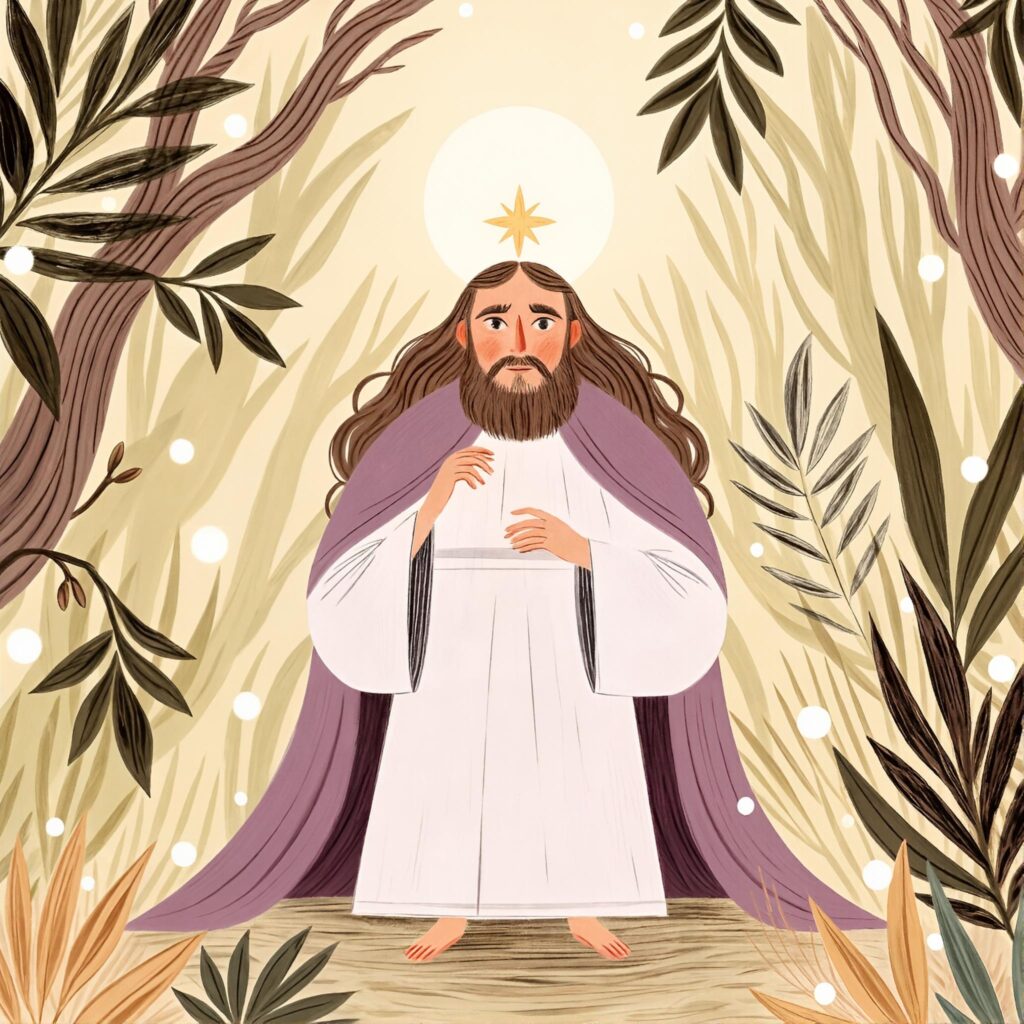
The Architect — The Lord of Eden — The God Who Lost and Stayed
“He did not dream the world. He found it dreaming, and he could not bear that it had no master.”
| Status | Living; rules Eden — present but diminished, still actively shaping mortal affairs through Aslan and his church |
| Alignment | Lawful Neutral, trending toward Lawful Evil in practice — his law is real, his cruelty situational, his belief in his own righteousness total |
| Domain | Order, hierarchy, divine law, creation-through-will, the structured mortal world, judgment, succession |
| Symbols | A single unwavering flame; a closed eye (judgment); a throne on a mountain; the number one, written as a vertical line with no curve |
| Divine Tier | Primordial, arrived — unlike Danu, he came from outside Once and claimed it; his power is immense but bounded by the world’s pre-existing nature |
| Titles | The One God, The Architect, Lord of Eden, The Unnamed (by foes), Father, The God of the Vertical Line |
| Known Kin | Son: Adam (favorite). Adam’s line with Eve produces all non-fey mortal royalty. Aslan is his champion, not his son — the distinction matters. |
| Weakness | His hierarchy requires acknowledgment. A world that refuses to look at him has a power he cannot simply override. |
The world of Once did not need a god. It was already alive — dreamed into being by mortal imagination, tended by Danu’s living magic, inhabited by fey and gods and spirits of every kind, ungoverned and ungovernable and, to a being of the One God’s particular temperament, deeply, profoundly wrong.
He arrived young and ambitious — young by the standards of divine beings, which means he had been in existence for millennia rather than the ages that Danu predates. He came from elsewhere — from a place the histories of Once do not name, because no one living remembers it and he has never explained. What he brought with him was not magic in the living sense, but something equally powerful: a vision. An idea of what a world should be. Organized, ranked, purposeful. Every mountain in its place. Every creature with a role. Every god in proper relation to the one above it.
The problem was that Once already had gods, and they had not asked for a ranking system, and they were not interested in one. The Divine Schism — the war that followed — was not a war of evil against good. It was a war of one architectural vision against the entire world’s resistance to being architecturally constrained. The older gods and the ancient fey fought for the right to remain what they were. The One God fought for the right to be the reason everything else existed.
He lost. This is the foundational fact of his character and the source of every decision he has made since: he came to a world and tried to be its master, and the world defeated him. He was banished from the Land of the Gods — the original seat of divine authority — and retreated to a corner of the world he named Eden and made entirely his own. He did not accept this as a defeat. He accepted it as a setback.
He has spent ten thousand years treating a loss as a temporary inconvenience. This is not denial. It is a theological position: he believes, with complete sincerity, that the world’s resistance to his order is an error that will eventually be corrected. Everything he does — every church, every king, every divine law — is oriented toward that correction.
In the aftermath of the Schism, the world was broken in ways that made everyone — victors and defeated alike — uncomfortable. The One God controlled Eden and his immediate sphere. The older powers controlled everything else. Neither could function well in the other’s territory. The mortal populations caught between them suffered most.
Danu made her offer in this context: Lilith, her eldest daughter, as a bride for Adam, the One God’s favorite son. It was a genuine peace proposal — the intermingling of the two divine lines, the Two Bloodlines that would produce a world that could hold both orders. The One God accepted, because the offer was politically advantageous and because he recognized in Danu an intelligence he could not simply dismiss.
What happened next reveals everything important about him. Lilith refused to submit to Adam’s authority. The One God, presented with a choice between honoring the spirit of Danu’s peace offer and enforcing his own hierarchy, chose enforcement. He cursed Lilith and expelled her from Eden. The peace proposal was technically still intact — Adam was still the One God’s son, Lilith was still Danu’s daughter, the bloodlines still technically connected through this union — but the spirit of the offer, the genuine partnership Danu had proposed, was destroyed in the moment he decided that his law was more important than the bargain he had implicitly accepted.
DM NOTE
This decision is his defining act. Not the Schism — anyone can lose a war. It is the moment after the peace offer, when he had the chance to accept something genuinely new, and chose instead to assert control. Everything in Once that is wrong — every contested bloodline, every war between fey and mortal, every child caught between two divine inheritances — traces to this moment. He knows this. He believes he was still correct.
The One God is not evil. This is important to understand, and it is uncomfortable to understand, because his actions have produced enormous suffering. He is genuinely good in the way that a very rigid system can be genuinely good: he rewards loyalty, he protects those who follow his law, he provides order in places where chaos causes real harm, and he believes sincerely in the rightness of what he is doing. His heaven — Eden, the paradise he built — is a real paradise for those who fit its requirements. He is not a fraud.
He is, however, constitutionally incapable of tolerating anything that does not fit his requirements. Not because he is cruel — cruelty is incidental, not structural — but because the existence of things outside his hierarchy is, to his fundamental nature, an architectural flaw. A wall with a crack in it is not a wall. A world with parts that refuse to be ordered is not an ordered world. He does not hate Lilith or Danu or the old fey. He simply cannot accept their existence as legitimate on their own terms.
His alignment is Lawful Neutral in its deepest structure — the law is real, it applies consistently, it is not arbitrary. But the law is his law, and in practice, his law’s consistent application to a world that contains beings who did not consent to it produces outcomes that are indistinguishable from Lawful Evil. He does not see this. He experiences his law as benevolent by definition, because it is his law, and he is good.
He rules Eden as — and the world bible’s own term is exact here — Dictator Adam serves under him, and the structure of Eden is a perfect, closed hierarchy with himself at the top. He has not left Eden in millennia. He does not need to. He operates through Aslan, through the church, through the mortal kings who claim his lineage, through the thousand-year accumulation of institutions that enforce his vision without requiring his direct presence.
This is both his greatest strength and his deepest vulnerability. He is everywhere his law is acknowledged. He is nowhere his law is refused. The fey courts, the witch bloodlines, the kingdoms that carry Danu’s magic — these are blank spots in his map, places his influence reaches only indirectly, through the mortal blood that also descends from Adam and Eve. He cannot command what will not acknowledge him. He knows this. He is patient about it the way a glacier is patient.
| Trait | Expression in Play |
| Total, sincere belief in his own righteousness | He never argues from bad faith. He argues from a framework in which he is, by definition, correct — and he is genuinely surprised when beings disagree. This makes him harder to argue with than a villain who knows he’s wrong. |
| Incapable of genuine partnership | He accepted Danu’s offer and immediately violated its spirit. He cannot form alliances; he can only accept subordinates and grudgingly acknowledge peers he hasn’t yet dominated. Players who try to negotiate with him will find the goalposts move precisely as far as his power allows. |
| Long, patient, institutional memory | He does not forget. He does not forgive in any meaningful sense — forgiveness implies the other party was right to transgress. He archives. He waits. Civilizations that defied him three thousand years ago find his attention returning when they are vulnerable. |
| Genuine tenderness for the mortal line | Adam and Eve’s descendants are his people in a way that feels almost parental. He does not want them to suffer — he wants them to be saved, in his terms. The suffering his law produces is, to him, the cost of the salvation he is providing. He believes this. |
| Profound loneliness he will not acknowledge | He came from elsewhere. He lost the war. He lives in a corner of a world that was not made for him and has never fully accepted him. He has been alone in Eden for ten thousand years. He will not speak of this. It shapes everything. |
Leave a Reply